
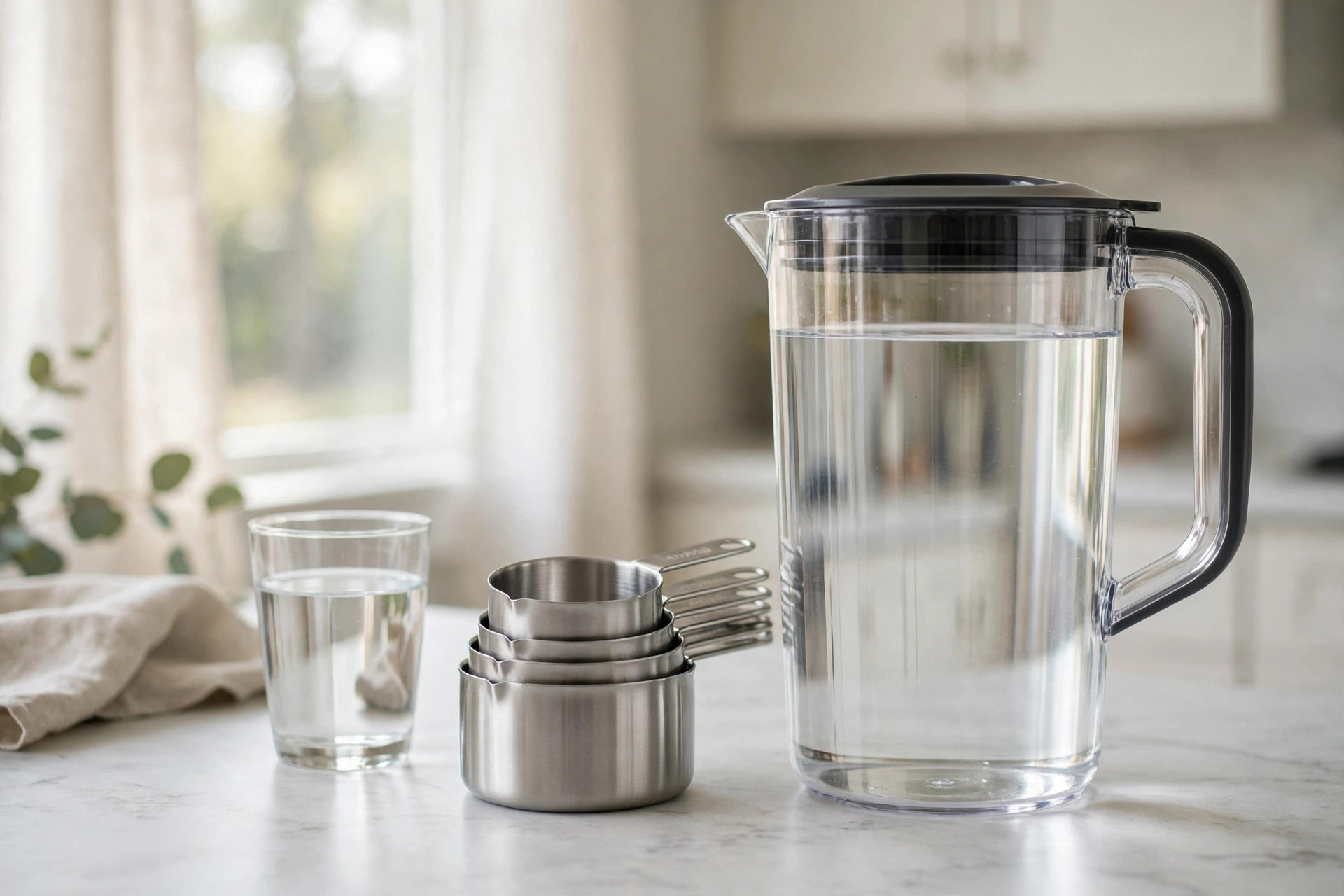
How Many Ounces in a Gallon?
Quick answer: there are 128 fluid ounces in one US gallon. A half gallon holds 64 fluid ounces, a quart holds 32, a pint holds 16, and a cup holds 8. If you are working from a UK or imperial source, the answer changes, because one imperial gallon holds 160 imperial fluid ounces. For everyday use in the United States, 128 is the number to remember.
| Unit | Result |
|---|---|
| US fluid ounces | 128 |
| US gallons | 1 |
| UK (imperial) gallons | 0.8327 |
| US quarts | 4 |
| US pints | 8 |
| US cups | 16 |
| Tablespoons | 256 |
| Teaspoons | 768 |
| Liters | 3.785 |
| Milliliters | 3,785 |
US measures: 1 US gallon = 128 fl oz = 3.785 liters. A UK imperial gallon is bigger — 160 imperial fl oz (4.546 liters) — so always check which gallon a recipe or label means.
Where the Number 128 Comes From
The 128 is not a random number someone picked. It falls out of the way the US liquid gallon is built, one step at a time. A gallon splits into 4 quarts, each quart splits into 2 pints, each pint splits into 2 cups, and each cup holds 8 fluid ounces. Multiply the chain, 4 × 2 × 2 × 8, and you land exactly on 128.
The US gallon is also fixed by law, so the number never drifts. NIST, the US standards body, defines one liquid gallon as exactly 231 cubic inches. In metric terms that is 3.785411784 liters, and one US fluid ounce works out to about 29.57 milliliters. Labels and measuring jugs may round those figures, but the official values sit behind every chart on this page.
Converting in either direction takes one step. To turn gallons into fluid ounces, multiply by 128, so 3 gallons is 384 fluid ounces. To go back the other way, divide fluid ounces by 128, so 96 fluid ounces is 0.75 gallon. If the amounts get awkward, the converter on this page does the same math for you in seconds.
Gallons to Ounces Conversion Chart
Most people do not need the formula. They need the number for the container in front of them. This chart covers the sizes that show up in kitchens, garages, and stores, from an eighth of a gallon up to a full drum.
| Gallons | Fluid ounces |
|---|---|
| 1/8 gallon | 16 fl oz |
| 1/4 gallon | 32 fl oz |
| 1/3 gallon | 42.67 fl oz |
| 1/2 gallon | 64 fl oz |
| 2/3 gallon | 85.33 fl oz |
| 3/4 gallon | 96 fl oz |
| 1 gallon | 128 fl oz |
| 1.5 gallons | 192 fl oz |
| 2 gallons | 256 fl oz |
| 2.5 gallons | 320 fl oz |
| 3 gallons | 384 fl oz |
| 4 gallons | 512 fl oz |
| 5 gallons | 640 fl oz |
| 10 gallons | 1,280 fl oz |
| 55 gallons (drum) | 7,040 fl oz |
Going the other way matters just as often, since bottles and jugs are sold by the ounce. A few anchor points are worth keeping: 32 fl oz is a quarter gallon, 64 fl oz is a half gallon, and 96 fl oz is three quarters of a gallon. Anything past 128 is into whole gallons, so 256 fl oz is 2 gallons and 640 fl oz is 5 gallons.
Half Gallon, Quart, Pint and Cup
The smaller US measures all hang off the same chain, and they are the ones recipes actually use. One gallon holds 4 quarts, 8 pints, 16 cups, 128 fluid ounces, 256 tablespoons, or 768 teaspoons. A quart is a quarter of a gallon, a pint is an eighth, and a cup is a sixteenth. Once you hold that ladder in your head, most kitchen conversions take seconds.
| Measure | Fluid ounces | Cups | Milliliters |
|---|---|---|---|
| 1 gallon | 128 | 16 | 3,785 |
| 1/2 gallon | 64 | 8 | 1,893 |
| 1 quart | 32 | 4 | 946 |
| 1 pint | 16 | 2 | 473 |
| 1 cup | 8 | 1 | 237 |
A memory picture helps the ladder stick. Picture a big letter G for gallon, with 4 Qs inside it for quarts, 2 Ps inside each Q for pints, and 2 Cs inside each P for cups. That one picture, often called the Gallon Man, holds the whole system: 4 × 2 × 2 gives 16 cups, and 16 cups at 8 ounces each gives the 128. Teachers use it in classrooms because it works in about ten seconds.
There is a numbers trick hiding in the same ladder. The number 128 is what you get when you multiply 2 by itself seven times, 2 × 2 × 2 × 2 × 2 × 2 × 2. Almost every step in the system doubles the one before it, which is why the ladder lands on such a tidy power of two.
US Gallon vs UK Imperial Gallon
Here is where most wrong answers come from. The United States and the United Kingdom both use a unit called the gallon, but the two gallons are not the same size. The imperial gallon, set in British law in 1824 and still used for UK fuel economy figures, holds about 20 percent more than the US gallon.
| US gallon | UK imperial gallon | |
|---|---|---|
| Fluid ounces (own system) | 128 US fl oz | 160 imperial fl oz |
| In liters | 3.785 L | 4.546 L |
| One fluid ounce | 29.57 mL | 28.41 mL |
| In US fluid ounces | 128 | about 153.7 |
There is a second twist that catches people out. Not only is the imperial gallon bigger, the imperial fluid ounce is slightly smaller than the US one, at 28.41 milliliters against 29.57. That is why one imperial gallon equals about 153.7 US fluid ounces and not a rounder number. When a British recipe, car manual, or fuel figure quotes gallons, check which system it means before you measure anything.
Fuel economy is the everyday example. A car rated at 40 miles per gallon in the UK is burning fuel by the bigger imperial gallon. Convert that same car to US gallons and the figure drops to about 33.3 miles per gallon. Nothing about the car changed, only the size of the gallon behind the number.
How Many Water Bottles Make a Gallon?
This is the version of the question people ask at the gym and at their desk. The math is one division: take 128 and divide it by the size of your bottle. A standard 16.9 ounce bottle goes into a gallon about 7.6 times, so eight bottles put you slightly over. How many water bottles is a gallon depends on the bottle in your hand, and the table below gives the count for each common size.
| Bottle size | Bottles per US gallon |
|---|---|
| 8 oz | 16 |
| 12 oz | 10.7 |
| 16 oz | 8 |
| 16.9 oz (500 mL) | 7.6 |
| 20 oz | 6.4 |
| 24 oz | 5.3 |
| 32 oz | 4 |
| 40 oz tumbler | 3.2 |
| 64 oz jug | 2 |
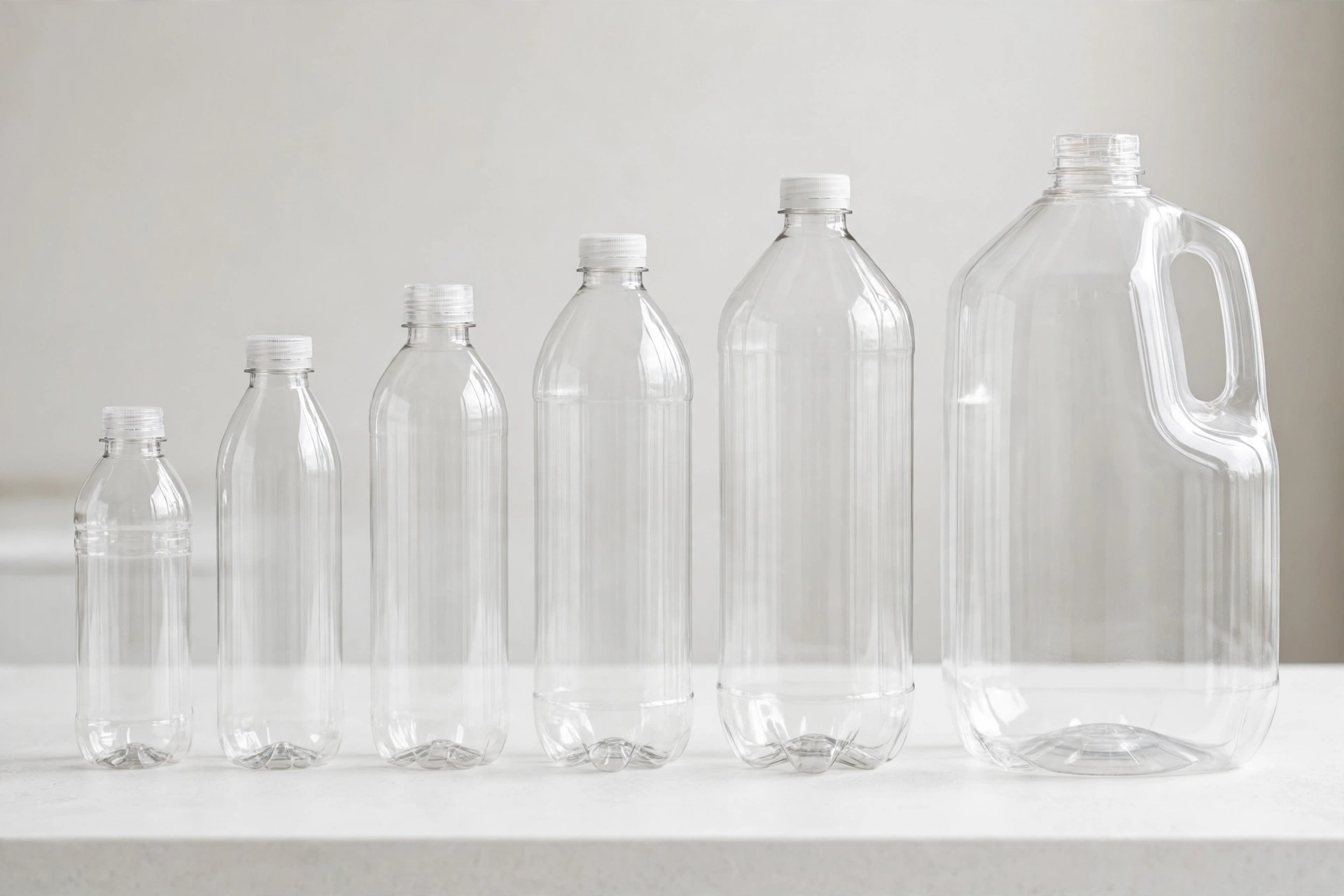
The 40 ounce tumbler deserves a line of its own, because so many people carry one now. At 3.2 refills per gallon, the tracking gets easy: three full tumblers and a short fourth one close out the day. A 32 ounce bottle needs exactly four fills, which is the other popular way to count. Pick whichever container you already own and let the number do the work.
A gallon of water a day is a common challenge, so it is worth a sense check. The National Academies puts adequate total water intake, from food and drink together, at about 3.7 liters a day for men and 2.7 liters for women. Most people get roughly a fifth of that from food, so a full gallon of drinking water is more than most adults need. Treat the gallon as a ceiling for tracking, not a target you must hit, and spread it through the day rather than drinking large amounts at once.
Fluid Ounces Are Not Ounces of Weight
This is the second big trap in the whole topic. A fluid ounce measures volume, meaning how much space a liquid takes up. An ounce on a kitchen scale measures weight, meaning how heavy something is. The two happen to sit close together for water, and that coincidence is exactly what confuses people.
Run the numbers for water and you can see the gap. A US gallon of water weighs about 8.34 pounds, which is roughly 133 ounces by weight, not 128. One fluid ounce of water weighs about 1.04 ounces on a scale. For most drinks the difference is too small to matter, but it is real, and for other liquids it grows fast.
| Liquid | Weight of 1 US gallon |
|---|---|
| Water | about 8.34 lb |
| Milk | about 8.6 lb |
| Cooking oil | about 7.6 to 7.7 lb |
| Gasoline | about 6.0 to 6.3 lb |
| Diesel | about 7.0 to 7.1 lb |
| Propane (liquid) | about 4.2 lb |
| Honey | about 11.8 to 12 lb |
Gasoline surprises people the most. A gallon of it weighs only a little over 6 pounds, because fuel is much less dense than water. Diesel sits between gasoline and water at about 7 pounds a gallon, while honey goes the other way and weighs close to 12 pounds a gallon. This is also why "8 ounces of flour" in a recipe means weight: a cup of flour weighs closer to 4.5 ounces, and measuring it by volume throws the recipe off.
Ounces per Gallon for Cleaning and Dilution
Anyone who has mixed a cleaning concentrate has met the phrase "ounces per gallon" (oz per gallon) on a label. Concentrates for mops, sprayers, and disinfecting are sold strong and diluted at set ratios, and every one of those ratios is built on the same 128. The rule is simple: divide 128 by the second number of the ratio and you get the ounces of concentrate for one gallon.
| Dilution ratio | Concentrate per gallon | Concentrate per quart (32 oz) |
|---|---|---|
| 1:256 | 0.5 fl oz | 0.125 fl oz |
| 1:128 | 1 fl oz | 0.25 fl oz |
| 1:64 | 2 fl oz | 0.5 fl oz |
| 1:32 | 4 fl oz | 1 fl oz |
| 1:16 | 8 fl oz | 2 fl oz |
So a bottle marked 1:128 needs just one ounce of concentrate topped up to a full gallon, which is why those concentrates last so long. A 1:64 product takes 2 ounces per gallon, and a quart spray bottle of it takes half an ounce. Always follow the label on your own product over any chart, since disinfectants only work at the strength they were tested at. Guessing stronger is not better here, it just wastes product and can damage the surface.
Everyday Examples
The lemonade test shows how this plays out in a real kitchen. Say you are making drinks for 20 guests, one 8 ounce cup each, which comes to 160 fluid ounces. Divide by 128 and you need 1.25 gallons, or one gallon plus one quart, about 4.73 liters. In half-gallon jugs that is 2.5 jugs, so you buy three and have a little spare for ice melt and second cups.
The same numbers turn up outside the kitchen. A gallon of interior paint covers roughly 350 to 400 square feet in one coat, so a two gallon job is 256 fluid ounces of paint. Most car fuel tanks hold 12 to 20 gallons, and motor oil comes in quarts, four of which make a gallon. Home brewers work in 5 gallon batches, which is 640 fluid ounces and fills about 53 standard 12 ounce bottles.
Bottles at the bar follow the same math. A standard 750 milliliter wine bottle holds about 25.4 fluid ounces, so one gallon works out to almost exactly five bottles. Poured at the usual 5 ounces a glass, a gallon gives you roughly 25 glasses, and a 64 ounce growler is simply half a gallon with a handle.
For emergency storage, the gallon is the planning unit too. FEMA guidance works on one gallon of water per person per day for drinking and basic sanitation. A family of four storing three days of water needs 12 gallons, which is 1,536 fluid ounces. Seeing the number in both units makes it much easier to check what your containers actually hold.
What Is a US Dry Gallon?
Once in a while you will meet a third gallon, the US dry gallon. It is an old unit for grain, fruit, and other dry goods, and it equals an eighth of a US bushel. At about 4.4 liters it is roughly 16 percent bigger than the liquid gallon.
You will almost never see it on a modern label. Berries and produce are sold by the dry pint or by weight these days, and fluid ounces belong to the liquid gallon only. If a bag of rice or flour lists ounces, those are weight ounces, full stop. For anything you pour, the liquid gallon and its 128 fluid ounces are the ones that count.
How to Measure a Gallon Correctly
Measuring a gallon sounds foolproof, but small habits throw the number off. Start with a proper liquid measuring jug, not a dry-ingredient cup, since the two are shaped differently and read differently. Set the jug on a flat, level surface, because a tilted counter quietly adds or steals ounces. Pour, then bend down and read the bottom of the meniscus, the curved surface of the liquid, at eye level.
There is a simple field test if you doubt your jug. Fill a 32 fluid ounce quart measure four times and pour each one into the gallon container. Four full quarts should land exactly on the gallon line, since 4 × 32 = 128. If the level sits off the mark, the jug is wrong, not the math, and it is time to replace it. Temperature plays a small part too, since liquids expand slightly as they warm, but for kitchen and home use the difference is too small to chase.
Common Mistakes to Avoid
Most conversion errors come from a short list of mix-ups. The first is using 128 for a British source, when the imperial answer is 160 of its own smaller ounces. The second is treating fluid ounces and weight ounces as the same thing, which only nearly works for water.
The third is forgetting that labels round their numbers. A nutrition panel may call a serving 8 fl oz and show 240 mL, while a true US cup is 236.6 mL, and both are fine for their own purpose. The fourth is mixing dry and liquid measures, since a dry pint is not a liquid pint. Slow down for one second, check which unit and which system you are holding, and the math almost always takes care of itself.
Quick Recap
- One US liquid gallon = 128 fluid ounces = 3.785 liters.
- One UK imperial gallon = 160 imperial fluid ounces = about 153.7 US fluid ounces.
- Half gallon = 64 fl oz, quart = 32 fl oz, pint = 16 fl oz, cup = 8 fl oz.
- About 7.6 standard 16.9 oz water bottles make one US gallon.
- A gallon of water weighs about 8.34 lb, gasoline about 6.2 lb, and honey close to 12 lb.
- For cleaning ratios, ounces per gallon = 128 divided by the ratio number, so 1:128 means 1 oz per gallon.
- Going gallon to oz, multiply by 128; going oz to gallon, divide by 128.
Frequently Asked Questions
How many ounces are in a gallon?
There are 128 fluid ounces in one US liquid gallon. A UK imperial gallon holds 160 imperial fluid ounces, which is about 153.7 US fluid ounces.
Is 64 oz a half gallon?
Yes. Half of 128 is 64, so 64 fluid ounces is exactly half a US gallon, equal to 2 quarts or 8 cups.
How many cups are in a gallon?
There are 16 cups in a US gallon. Each cup is 8 fluid ounces, and 16 × 8 = 128.
How many 16.9 oz water bottles make a gallon?
About 7.6 bottles. Eight full bottles give you 135.2 ounces, a little over one gallon.
How many ounces are in a gallon of milk?
A US gallon of milk holds 128 fluid ounces, the same as any US liquid gallon. By weight it comes to about 8.6 pounds, a bit more than water, because milk is slightly denser.
How many ounces are in a gallon of gasoline?
By volume, a US gallon of gasoline is 128 fluid ounces, like any liquid. The question people usually mean is weight, and a gallon of gasoline weighs about 6.0 to 6.3 pounds depending on the blend and temperature.
How much does a gallon of water weigh?
About 8.34 pounds at room temperature, or roughly 133 ounces by weight. A UK imperial gallon of water weighs about 10 pounds.
How do I convert gallons to ounces?
Multiply gallons by 128 to get US fluid ounces. Divide fluid ounces by 128 to go back to gallons.
How many ounces are in a gallon in Canada?
Canada works in liters today, and one US gallon is 3.785 liters. Older Canadian recipes and references may use the imperial gallon of 160 imperial fluid ounces, because Canada followed the imperial system before going metric. When a Canadian source just says gallon, check its age and context before you convert.
Is drinking a gallon of water a day safe?
For most healthy adults it is simply more than they need, and the bigger risk is drinking a large amount very fast. Spreading a gallon across a full day is a different matter from forcing it down in an hour or two, which can dilute the sodium in your blood. If you have a heart or kidney condition, ask your doctor before chasing any daily water target.
Numbers on this page follow the official definitions in NIST Handbook 44 and the UK Weights and Measures Act 1985.

One Comment